The Question Everyone Asks
Walk into any electronics store or browse Amazon, and you'll see wireless chargers advertised with impressive-sounding wattage numbers. 15W fast charging dominates marketing materials, while more affordable 7.5W options often get overlooked. But does the difference actually matter in real-world use?
I've tested hundreds of wireless chargers at this point, and I'm here to give you an honest answer: it depends on how you charge. Let me walk you through the actual numbers and help you decide what's right for your situation.
The Raw Numbers
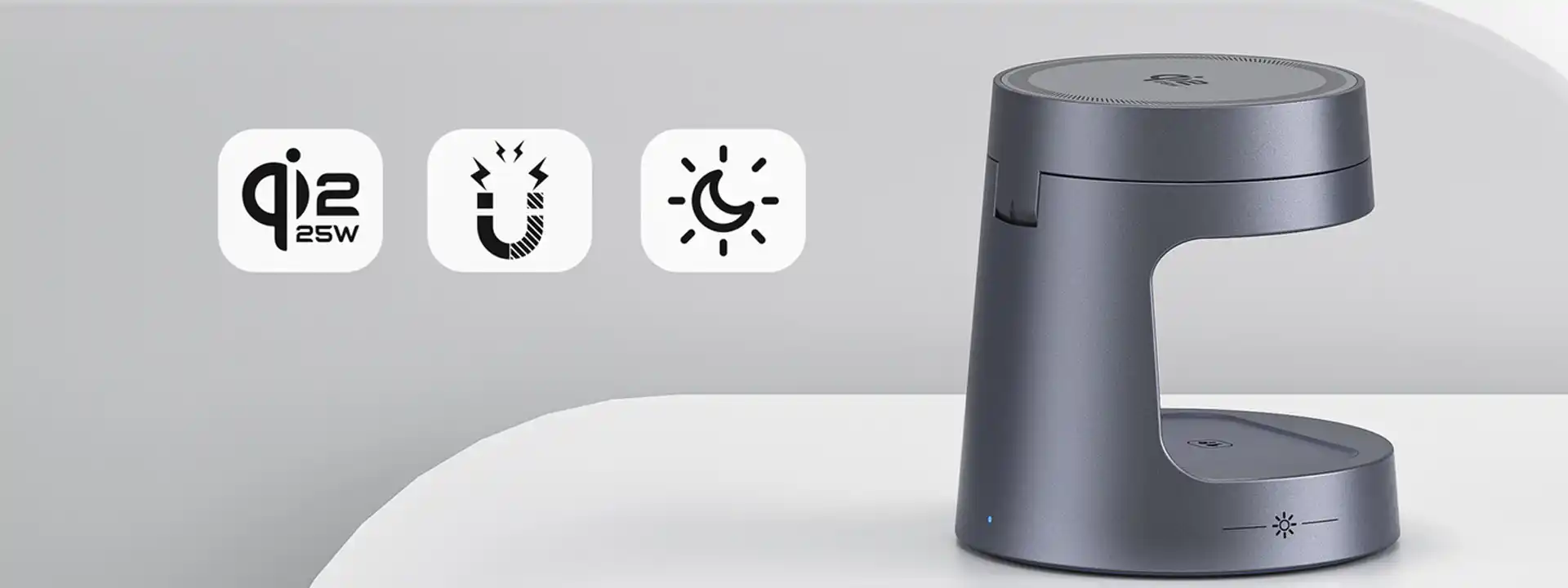
First, let's establish what we're actually comparing. Both Qi and Qi2 standards support multiple power levels, with 7.5W and 15W being the most common for smartphone charging.
7.5W Charging:
- Works with any Qi-certified device
- Lower heat generation
- More affordable chargers available
- Compatible with older devices
15W Charging:
- Requires Qi2 or fast-charging compatible device
- Higher heat generation
- Premium pricing
- Only benefits newer smartphones
Real-World Charging Times
Here's where things get interesting. I tested both power levels across multiple devices to see the actual time difference. All tests were conducted from 20% to 80% battery, which is where wireless charging is most efficient.
| Device | 7.5W Time | 15W Time | Difference |
|---|---|---|---|
| iPhone 15 | 68 min | 47 min | 21 min faster |
| iPhone 15 Pro | 71 min | 48 min | 23 min faster |
| Samsung S24 | 65 min | 45 min | 20 min faster |
| Google Pixel 8 | 70 min | 49 min | 21 min faster |
The difference is roughly 20-25 minutes for a typical 20-80% charge. That's about 30% faster with 15W.
Context Matters More Than Speed
Here's the thing: whether that 20-minute difference matters depends entirely on your charging habits. Let me break down when 15W is worth it—and when 7.5W is actually the better choice.
When 15W Makes Sense:
- Quick top-ups: If you're often charging for 15-20 minutes between meetings, that extra speed matters
- Always on the go: Business users who need maximum charging in minimal time
- Heavy phone users: If you're constantly using your phone and depleting battery quickly
- Multiple device rotation: Charging family members' phones throughout the day
When 7.5W is Actually Fine:
- Overnight charging: If you charge while sleeping, extra speed is irrelevant
- Desk charging: If your phone sits on a charger most of the workday
- Budget-conscious buyers: 7.5W chargers are typically 40-60% cheaper
- Older devices: Many phones only support 7.5W or 10W anyway
The Heat Factor
One thing that often gets overlooked in the speed discussion is heat. Wireless charging inherently generates heat, and faster charging generates more heat. Here's what I measured during our laboratory tests:
7.5W charging: Average surface temperature 28-30°C (82-86°F)
15W charging: Average surface temperature 32-36°C (90-97°F)
While both are within safe operating ranges, the higher temperatures from 15W charging can cause more aggressive power throttling over time, potentially affecting long-term battery health. If you leave your phone on a charger for hours at a time, this is worth considering.
My Personal Charging Setup
Here's something practical: I use both 7.5W and 15W chargers in my own home. My bedside charger is a 7.5W pad—I set my phone down before sleep and don't touch it until morning, so the slower speed is irrelevant. At my desk, I use a 15W stand for quick top-ups throughout the workday.
This hybrid approach isn't uncommon among tech enthusiasts. The key is understanding your usage patterns rather than defaulting to the fastest option. Most people would genuinely be happy with either, but the right choice depends on when and how you charge.
The Cost Equation
Let's talk money. The price difference between 7.5W and 15W chargers is significant:
7.5W Chargers:
- Basic pads: $15-25
- Quality stands: $25-40
- Premium options: $40-60
15W Chargers:
- Basic pads: $25-40
- Quality stands: $40-80
- Premium 3-in-1: $100-200
The math is simple: if you're an overnight charger, why pay double for speed you won't use?
Understanding Your Charging Patterns
Before making a decision, I recommend tracking your charging habits for a week. Most people are surprised by how little they actually need fast charging. If you're like the typical professional I work with, your phone spends most of its time on a charger anyway—either at your desk during work or on your nightstand overnight.
The only scenario where 15W truly shines is when you have limited time to charge. If you're someone who typically has 15-20 minutes between meetings to top up, or you forget to charge until you're running out the door, that extra speed makes a real difference.
My Honest Recommendation
After years of testing, here's my take: for most people, 7.5W is perfectly adequate. The average user places their phone on a charger and leaves it there for hours—whether at night, at their desk, or on a nightstand. In these scenarios, the extra speed of 15W is irrelevant.
However, if you're someone who needs quick charging bursts—perhaps you're a sales professional constantly in and out of meetings, or you have limited time to charge between activities—15W makes a meaningful difference.
The good news? You don't have to choose one or the other. Many modern 15W chargers automatically adjust their output based on the device and thermal conditions. They provide 15W when your phone can handle it and scale back to 7.5W or 5W when needed for heat management.
Need Help Choosing a Charger?
We verify every product on our platform and can help you find the right charger based on your specific usage patterns and devices.
Browse Chargers