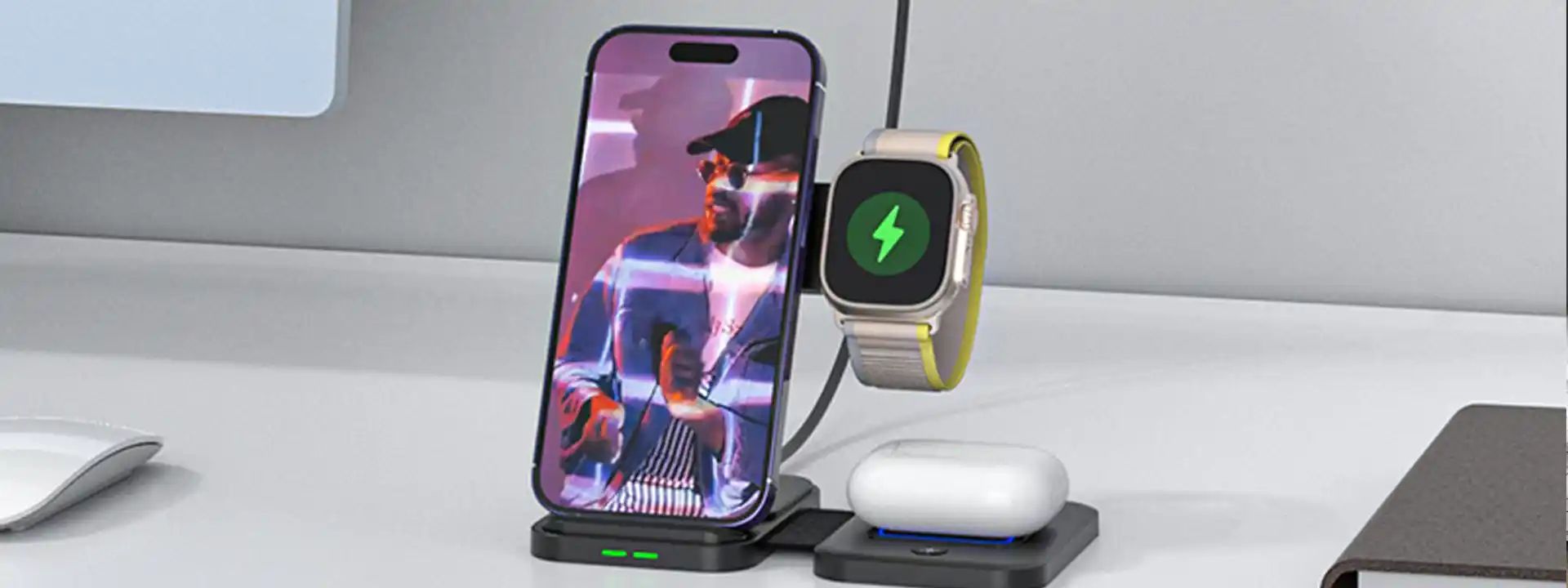
The Rise of Multi-Device Charging
The average tech user now carries multiple devices that need charging: a smartphone, wireless earbuds, and often a smartwatch. This has driven massive growth in multi-device charging stations, with 3-in-1 and 2-in-1 solutions becoming increasingly popular. But which one is right for you?
After testing dozens of these products and helping hundreds of B2B clients make sourcing decisions, I've developed a clear framework for understanding which type of charger makes the most sense for different use cases.
The biggest driver of this trend is convenience. Nobody wants to manage multiple cables and adapters anymore. The idea of one charger powering your entire daily carry is incredibly appealing, and the technology has finally caught up to make it practical.
A Real Client Story
Last month, I helped a client outfit their startup office with wireless chargers. They had 30 employees, each with varying device setups—some with Apple Watches, some with Samsung Galaxy Watches, and some with no smartwatch at all.
We ended up mixing both types: 2-in-1 chargers for about 60% of the team who didn't have smartwatches, and 3-in-1 chargers for the rest. This hybrid approach saved them about $1,500 compared to buying all 3-in-1 units, while still ensuring everyone had exactly what they needed.
Understanding the Options
What is a 2-in-1 Charging Station?
A 2-in-1 charger typically charges two devices simultaneously—most commonly a smartphone and wireless earbuds. These are the most common configuration and tend to be more affordable and compact than their 3-in-1 counterparts. They're ideal for users who don't own an Apple Watch or other smartwatch, or who prefer to charge their watch separately.
What is a 3-in-1 Charging Station?
A 3-in-1 charging station adds a third device slot, typically designed for a smartwatch. The Apple Watch is the most common use case, though some chargers support other Qi2-enabled smartwatches from Samsung, Google, and other manufacturers. These provide the ultimate convenience for Apple ecosystem users who want to charge everything in one place.
Key Differences
| Feature | 2-in-1 Charger | 3-in-1 Charger |
|---|---|---|
| Device Capacity | 2 devices | 3 devices |
| Typical Price | $30-60 | $80-200 |
| Size | Compact | Larger |
| Best For | Phone + Earbuds | Phone + Earbuds + Watch |
| Power Requirement | 30W adapter | 40W+ adapter |
Choose 2-in-1 If...
- You don't own a smartwatch: If your daily carry is just a phone and earbuds, there's no point paying extra for a watch charging slot you'll never use.
- Budget is a concern: 2-in-1 chargers typically cost half as much as comparable 3-in-1 options. You can get an excellent 2-in-1 for $40-50.
- Desk space is limited: These chargers are significantly more compact, making them perfect for small desks or bedside tables.
- You travel frequently: Many 2-in-1 chargers are designed to be portable, and some even fold flat for easy packing.
- Your watch uses a proprietary charger: Some smartwatches (like certain Fitbit models) don't support wireless charging and require their own proprietary magnetic charger.
Choose 3-in-1 If...
- You're in the Apple ecosystem: If you own an iPhone, AirPods, and Apple Watch, a 3-in-1 charger is the ultimate convenience. Charge everything overnight in one spot.
- You want to minimize cables: One charger, one power adapter, one cable. The simplicity is addictive once you experience it.
- Aesthetics matter: Premium 3-in-1 chargers like the Belkin BoostCharge Pro or Nomad Base Station are genuinely beautiful desk accessories.
- You have a modern Samsung watch: Samsung Galaxy Watch devices now support wireless charging and can be charged on many 3-in-1 stations.
- This is a gift: If you're buying for someone who might get a smartwatch in the future, a 3-in-1 is more future-proof.
Real-World Considerations
Power Delivery
Both types typically support 15W fast charging for phones, but 3-in-1 units require more powerful adapters (usually 40W or higher) to deliver full power to all devices simultaneously. Make sure to budget for a compatible power adapter if one isn't included.
Watch Charging Compatibility
Not all 3-in-1 chargers work with all smartwatches. Apple Watch charging requires Apple's magnetic connector, which most 3-in-1 chargers include. However, if you have a Samsung Galaxy Watch or other Android smartwatch, verify compatibility before purchasing.
Case Thickness
Most wireless chargers work through cases up to 5mm thick. However, thicker cases or cases with metal components may interfere with charging. This applies equally to both 2-in-1 and 3-in-1 chargers.
My Recommendation
In my experience helping clients choose between these options, the decision usually comes down to one simple question: Do you wear a smartwatch daily?
If yes, go with the 3-in-1. The convenience of charging all your daily devices in one spot is worth the extra investment. You'll never go back to separate chargers once you've experienced the one-stop charging life.
If no, save your money and get a quality 2-in-1. You'll get essentially the same charging experience for your phone and earbuds at roughly half the price. The money you save could go toward a great pair of earbuds or other accessories.
Future Trends
Looking ahead, I expect to see even more innovative charging solutions. Some manufacturers are already experimenting with 4-in-1 chargers that can handle two phones simultaneously, and wireless charging furniture integration is becoming more common. The industry is moving toward a future where dedicated chargers might become unnecessary as wireless charging becomes built into desks, tables, and even cars.
But for now, the 2-in-1 and 3-in-1 options available represent the best balance of convenience, cost, and performance for most users.
Need Help Choosing?
We stock both 2-in-1 and 3-in-1 charging stations from verified manufacturers. Our team can help you find the perfect match for your device ecosystem.
Browse Charging Stations