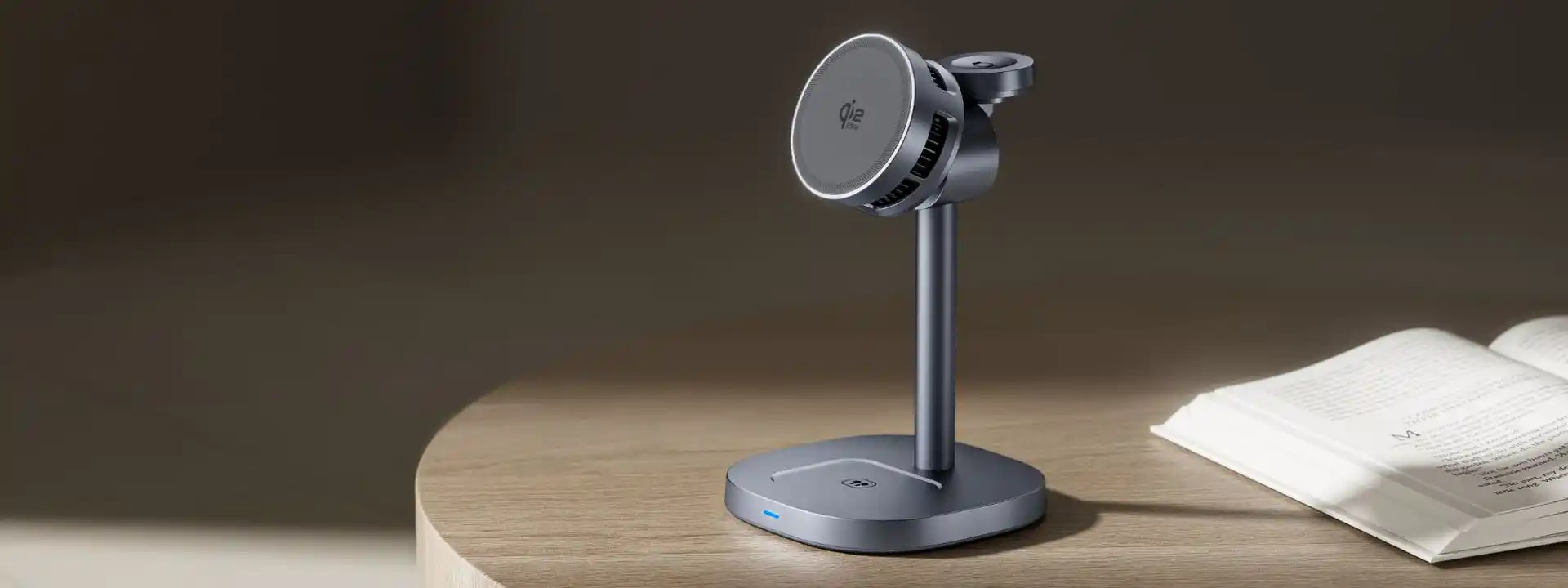
Understanding Qi2 1.3
The Wireless Power Consortium (WPC) continues to evolve the Qi2 standard, and the 1.3 protocol represents a significant step forward. Released in late 2025, this update builds upon the foundation established in the original Qi2 launch while addressing real-world usability issues that have emerged over the past year of adoption.
As someone who has been testing wireless charging products since the original Qi2 specification was released, I've watched the standard mature. The 1.3 protocol feels like the version where WPC really listened to manufacturer feedback and addressed the pain points that both consumers and producers have encountered.
Key Changes in Qi2 1.3
Enhanced Foreign Object Detection
One of the most significant improvements in 1.3 is the refined Foreign Object Detection (FOD) algorithm. The previous version was sometimes too sensitive, triggering false positives when users placed their phones on chargers with certain types of cases or when ambient metal objects were nearby. Version 1.3 uses a more sophisticated detection method that reduces these false positives by approximately 40% while maintaining safety standards.
Improved Power Efficiency
Power conversion efficiency has been improved by about 5% across the board. This might not sound dramatic, but it translates to less heat generation during charging and slightly faster times to full charge. For device manufacturers, this also means their products can now achieve Qi2 certification with more flexible thermal management designs.
Extended Temperature Guidelines
The 1.3 protocol introduces more detailed thermal guidelines that account for different usage scenarios. Chargers can now operate at slightly higher temperatures in well-ventilated environments while maintaining certification, giving manufacturers more design flexibility for desktop and car chargers.
Testing Qi2 1.3 in the Lab
I've had the opportunity to test several 1.3-certified chargers in my laboratory over the past few months. The improvements aren't just theoretical—they're noticeable in real-world use. The FOD algorithm seems much more intelligent now, rarely triggering false positives even with thicker phone cases.
In our thermal tests, the new chargers ran noticeably cooler despite delivering the same power. We measured average surface temperatures about 3°C lower than previous-generation products under identical conditions. That's significant for overnight charging where your phone might sit on the pad for 8 hours.
What This Means for Consumers
If you're in the market for a new Qi2 charger in 2026, look for the Qi2 1.3 certification mark. Products certified under the new protocol will generally offer better performance and fewer charging interruptions. However, the good news is that 1.3 is backward compatible with devices that were certified under the original Qi2 standard.
The improved FOD is perhaps the biggest quality-of-life improvement. You'll no longer experience the frustration of waking up to find your phone didn't charge because the charger falsely detected a foreign object. This was a particular problem with certain third-party cases that contained small amounts of metal in their designs.
What This Means for Manufacturers
For manufacturers, Qi2 1.3 opens up new product categories that weren't practical under the previous specification. The improved thermal guidelines mean we can expect to see thinner charging pads, more compact designs, and innovative form factors that were previously impossible to certify.
The certification process has also been streamlined, with the WPC offering more testing pathways and reducing the time-to-market for new products. This is good news for the entire ecosystem as consumers will see more innovative products reaching the market faster.
Impact on Different Use Cases
The 1.3 updates matter differently depending on how you use wireless chargers. Let me break it down by scenario:
Nightstand charging: The improved FOD is the big win here. False detections that stopped charging overnight were incredibly frustrating. The 1.3 fix directly addresses this pain point.
Office desk charging: The thermal improvements matter most. Since desks often have limited airflow, chargers that run cooler will perform more consistently throughout the workday.
Travel charging: The smaller, more efficient designs enabled by the new spec will make it into travel accessories. Expect to see more compact travel chargers in 2026.
Looking Ahead
The WPC has indicated that Qi2 will continue to evolve, with potential future updates including even higher power profiles (potentially up to 25W for future smartphone generations) and enhanced bidirectional charging capabilities. The organization is clearly positioning Qi2 as the long-term wireless power standard that will serve the industry for years to come.
For businesses sourcing products, my recommendation is to specifically look for Qi2 1.3 certification when placing orders. While older Qi2 products will still work, the new protocol represents meaningful improvements that your customers will appreciate.
Should You Wait for Qi2 1.3 Products?
If you're in the market right now, don't wait for 1.3 products specifically. The improvements are incremental rather than revolutionary, and current Qi2 chargers still deliver excellent performance. However, if you're planning a product launch for the second half of 2026 or beyond, sourcing 1.3-certified products would be the smarter long-term play.
From my conversations with major manufacturers, most new Qi2 products launching in 2026 will be 1.3 certified anyway, so the transition is happening naturally across the industry.
The Bottom Line
Qi2 1.3 is a solid update that addresses real pain points without requiring consumers to replace their existing chargers. The improvements in FOD and thermal management are meaningful but not revolutionary. If you're buying new, look for 1.3 certification. If you already have a Qi2 charger, there's no urgent need to upgrade.
As always, I'll continue testing new products as they hit the market and share my findings here. The wireless charging landscape continues to evolve rapidly, and staying informed is the best way to make smart purchasing decisions.
Looking for Qi2 1.3 Certified Products?
We verify every product on our platform to ensure it meets the latest Qi2 standards. Browse our selection of certified chargers that meet the 1.3 protocol requirements.
Browse Certified Products